
What Is Cast Stone? Uses, History, Benefits, and More
Learn what cast stone is, how it’s made, and why it's used in architecture today. Explore its history, benefits, and common applications.
Everything You Need to Know About Cast Stone
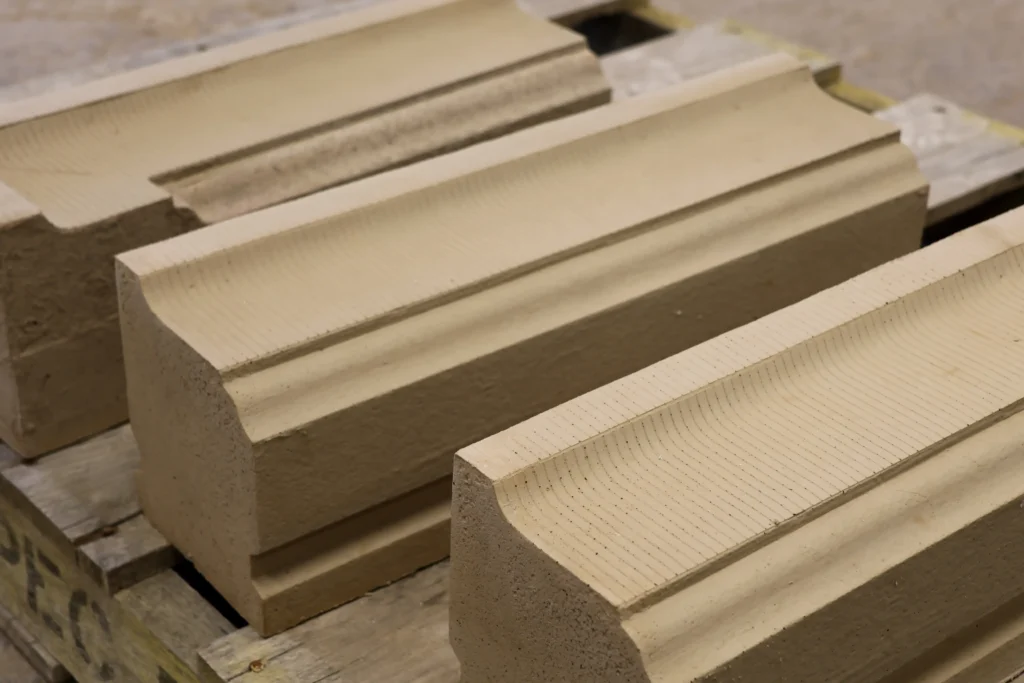
What Is Cast Stone?
Cast stone is a strong and versatile material commonly used in architectural design, construction, and restoration. Made from precast concrete, it is crafted to resemble natural stones like limestone, granite, or sandstone.
Its strength, visual appeal, and adaptability make it a top choice for designers and builders. With the use of pigments, cast stone can be tinted to match existing masonry or historic details, which is especially helpful when restoring older buildings.
Cast stone can be used in many architectural elements, such as facades, columns, cornices, balustrades, and custom decorative accents. It performs well in both classic and modern settings and can hold up to the elements over time.
Whether you’re designing a new structure or preserving the past, cast stone delivers the timeless look of natural stone with the benefits of a manufactured material.
A Brief History of Cast Stone?
During the Middle Ages, similar techniques appeared in the construction of cathedrals and city walls, where molded or composite stone details were used for both structure and ornamentation.
The cast stone we recognize today took shape in the late 19th century, developed as a precast concrete product that aimed to replicate the look and texture of natural stone. By combining fine aggregates, cement, and mineral pigments, manufacturers could create highly durable elements that closely resembled limestone, sandstone, or granite.
Cast stone began to see broader use in the United States and Canada in the late 1800s and early 1900s, especially in major cities like New York. Its ability to replicate the look of natural stone made it a practical solution for builders who needed architectural detail without the expense or limitations of quarrying. Designers used it in everything from building exteriors and trim to decorative accents and cornices.
By the 1920s, the name “cast stone” was firmly established in the architectural world. It referred to concrete elements formed in molds to achieve a stone-like appearance, offering reliable performance and creative flexibility for a wide range of projects.
What is Cast Stone Made Of?
Why Choose Cast Stone for Your Project?
Cast stone stands out for how easily it adapts to different design needs. It’s often chosen when there’s a need to match the look of existing materials, especially in restoration work, or when a project calls for custom architectural elements. The appearance of cast stone can be tailored in both color and texture, allowing it to blend in with surrounding stonework or create a unique and distinct design. But cast stone isn’t just about looks. It also offers solid performance. When reinforced with steel, it becomes even more structurally sound, making it well-suited for use in high-stress or load-bearing applications. From building facades to columns, cornices, and decorative features, cast stone brings both reliability and refined appearance to the job.